

How to Choose Fixed-Wing Drone Motors?
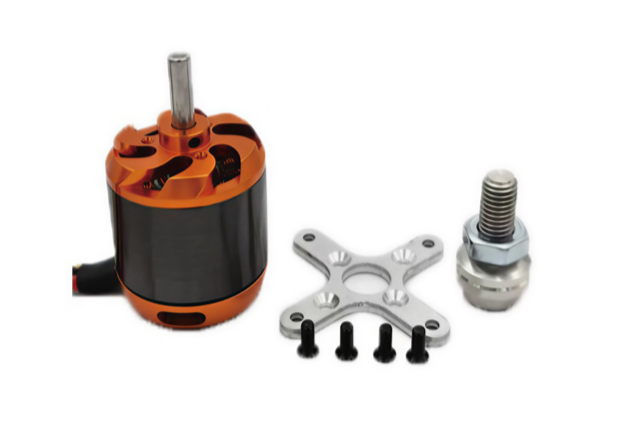
Selecting a motor for a fixed-wing drone is a comprehensive judgment centered on the flight mission. Whether a motor is suitable depends on the flight purpose, airframe scale, voltage system, and propeller configuration—factors that collectively impact propulsion efficiency, reliability, and overall flight performance.
1. Define the Flight Mission and Primary Goals
Selection should start with the flight mission, not just a simple comparison of parameters. Different missions prioritize endurance, payload, takeoff performance, and structural constraints differently, leading to varying requirements for the propulsion system. Long-endurance platforms prioritize cruise efficiency; heavy-payload platforms value torque and power margins; small fixed-wings are often limited by size and weight.
Example:
If your goal is a cruise-oriented drone with maximum flight time, prioritize a motor with high efficiency at cruise throttle rather than just pursuing "excessive takeoff thrust." Conversely, if your mission involves frequent takeoffs, short runways, or high payloads, motor torque and power margins become higher priorities while maintaining efficiency.
2. Determine Propeller and Voltage Systems
In a fixed-wing propulsion system, the propeller and voltage system should generally be determined before the motor. Propeller diameter and pitch determine the required RPM and torque range, while the voltage level directly affects operating current and system efficiency. Generally, large-diameter, low-RPM propellers are more efficient but require higher voltage systems and lower KV motors.
Example:
If your airframe allows 14–16 inch propellers and you plan to use a 6S or 8S battery system, your motor selection should naturally center on the "low RPM, high torque" operating range. If you select a high KV motor first, you may be forced to use smaller propellers to adapt, eventually compromising on efficiency and endurance.
3. Select the Appropriate KV Range
KV describes the motor's RPM characteristics, not its power. For fixed-wings, the correct KV depends on whether the motor can operate within its high-efficiency RPM range during the cruise phase. Low KV is better for high voltage and large-diameter propellers; high KV is better for low voltage and smaller configurations.
Example:
If you plan to use a 10S–12S battery to drive large folding propellers for cruising, choosing a motor with a high KV will cause the motor to operate at low throttle and high voltage for long periods, which actually reduces efficiency. A more reasonable choice is a lower KV motor to ensure cruise RPM falls within the ideal range of the efficiency curve.
4. Focus on Continuous Power and Motor Size
Since fixed-wing motors run continuously, continuous power capability and thermal stability are more valuable than peak power. A motor that is too small will face heat dissipation bottlenecks; one that is too large adds unnecessary weight. A reasonable goal is to have the motor running with a certain margin during the cruise phase.
Example:
If a motor is labeled with a "Max Power of 2000W," but your aircraft needs 600–800W for cruising, it is more important to confirm if the motor has good thermal margins in that specific power range rather than its ability to burst to 2000W for a few seconds.
5. Achieve System-Level Matching
The actual performance of a fixed-wing propulsion system is determined by the overall match. The ESC’s continuous current capability and the battery’s capacity and internal resistance directly affect the motor's cruise state. Fixed-wing platforms emphasize the stability and efficiency of the entire system over the extreme parameters of a single component.
Example:
A system where the "motor power is sufficient" may still fail if the ESC operates too close to its continuous current limit or if the battery experiences significant voltage sag during cruise. These issues reflect a system-level imbalance rather than a single "wrong" component selection.